LiveRem's analysis of employment and remuneration trends across New Zealand and Australia, January to June 2026
The defining feature of the 2026 job market so far is a contradiction.
Employers continued hiring throughout the first half of the year, adding people month after month. At the same time, the average salary being paid declined.
Look at headcount alone and the market appears healthy. Look at remuneration and a different picture emerges.
This analysis is based on LiveRem's private sector, real-time remuneration dataset, drawn from participating employers across New Zealand and Australia. Unlike traditional annual salary surveys, LiveRem's dataset is built from aggregated and anonymised payroll and HR data that updates continuously, providing a current view of how the labour market is actually moving. The dataset is currently weighted towards New Zealand, led by Auckland, with a growing Australian footprint across Sydney, Melbourne and Brisbane.
The figures below cover January through June 2026.
Employment continued to grow
Hiring remained positive throughout the first half of the year. Across the trailing 90 days to late June, the majority of organisations in the LiveRem dataset increased headcount rather than reduced it, resulting in overall employment growth of 2.3%.
March was the standout month, with employment increasing by 3.9%. Some of this reflects the typical lift after the December and January holiday period, but the strength of the increase was notable. Growth moderated through April (+1.0%) and May (+0.5%), suggesting employers entered the year with confidence before becoming more measured as winter approached.
Employment growth remained positive throughout the period. Headcount alone, however, tells only part of the story.
Average salaries moved lower
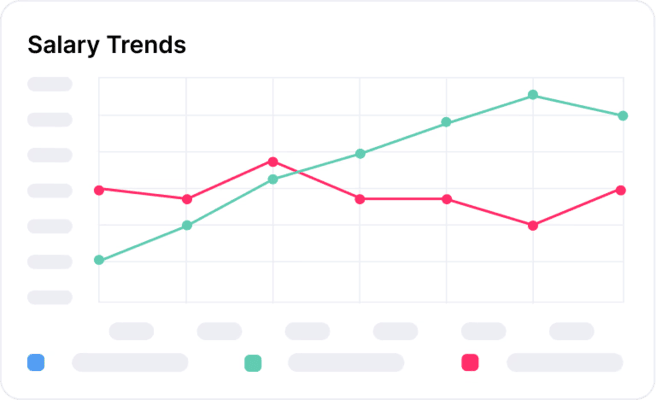
While organisations continued hiring, the average salary across the LiveRem dataset declined by 2.9% over the six-month period. The largest monthly movement occurred in April, when average remuneration fell by 2.3%.
That does not necessarily mean employees received pay cuts.
A more likely explanation is a shift in workforce composition. Employers may be hiring proportionally more junior employees, replacing experienced staff with lower-cost hires or filling vacancies at lower salary levels than those who left.
Whatever the reason, the result is the same. Average remuneration softened despite continued employment growth.
For employers, this changes the benchmarking conversation. Salary growth should not be assumed in today's market. Pay decisions based on last year's conditions may no longer reflect where the market sits today.
New hires are staying longer
One of the more encouraging findings from the first half of 2026 was improved retention among new employees.
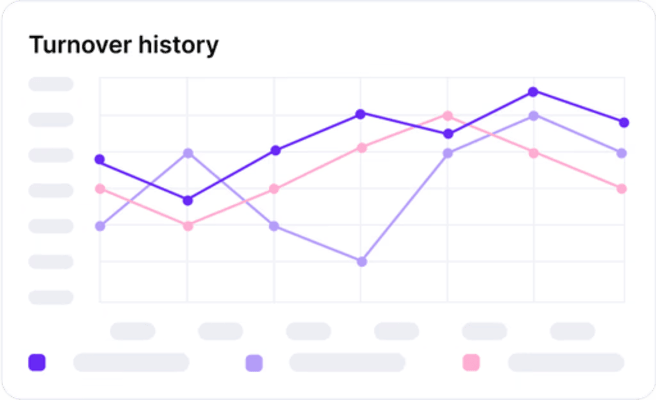
Early turnover, measured as employees leaving within their first 90 days, fell to 3.6%, down from around 5.5% a year earlier.
There are several possible explanations. A softer labour market provides fewer opportunities for employees to move between organisations. Employers may also be making better hiring decisions after becoming more selective throughout the recruitment process.
Some industries remain exceptions. Horticulture, for example, continues to experience significant early turnover because of seasonal employment patterns. Across the broader market, however, new hires are remaining with employers for longer.
Demand remains strongest for product, engineering and leadership
Search activity within LiveRem provides another perspective on the market by showing which roles employers are benchmarking most frequently.
Throughout the first half of 2026, Product Owners, Product Managers and Senior Software Engineers consistently ranked among the most searched positions, with Product Owner leading the list across several months. Executive leadership roles, including Chief Executive Officer, Chief Financial Officer and Chief People Officer, also featured prominently, alongside Security Engineers and senior HR positions.
The pattern suggests organisations continue investing in technology capability and experienced leadership while applying greater discipline to remuneration.
Internal mobility tells a similar story. Around 8.7% of employees changed roles within a three-month period. Clear progression pathways remain visible, particularly within software engineering and the trades. Career progression continues, even where external salary growth has slowed.
Growth remains centred on major cities
New Zealand continues to represent the majority of organisations within the LiveRem dataset, although Australia's representation continues to grow.
Hamilton recorded the strongest employment growth during the period at 4.0%, followed by Canterbury at 3.8% and Christchurch at 1.3%. Auckland remained the largest employment market, while Wellington and the Bay of Plenty also recorded steady growth.
The Australian dataset continues to expand across Sydney, Melbourne and Brisbane, providing an increasingly robust view of remuneration trends across both countries.
What employers should take from this
The first half of 2026 tells a clear story.
Employment continues to grow. Average salaries have softened. Employees are staying with employers for longer. Demand remains strongest in product, engineering and executive leadership.
Most importantly, market conditions have shifted. Employers are no longer operating in the same environment they were six or twelve months ago.
That makes current market intelligence more valuable than ever. Historical salary surveys provide a snapshot of where the market was. Live remuneration data provides visibility into where the market is today.
Organisations making remuneration decisions during the second half of 2026 should benchmark against current market conditions rather than historical assumptions. Understanding how the market is changing will lead to better hiring decisions, more effective remuneration strategies and greater confidence when planning workforce investment.
Data source: LiveRem private sector remuneration dataset, incorporating weekly analytics from participating employers between 1 January and 30 June 2026. Results are based on aggregated and anonymised payroll and HR data from organisations across New Zealand and Australia. The current dataset is weighted towards New Zealand while LiveRem's Australian dataset continues to grow.